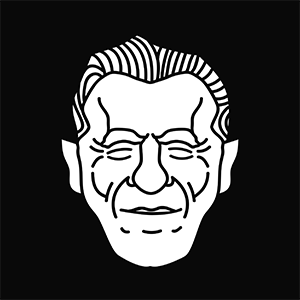
Baudelaire Bar – A Place Even the Poet Himself Wouldn’t Be Ashamed Of
Editor’s note – Why we are sharing this story today
This interview was originally published in 2018 by Startitup, shortly after the opening of Baudelaire Bar. At that time, Baudelaire was a new addition to the Bukowski story — an experiment, a second step, and a different interpretation of the same values.
We are sharing it today to capture the moment when the concept was still fresh, evolving, and being defined in real time. Looking back helps explain how the relationship between Bukowski and Baudelaire was shaped from the beginning — and how their differences were intentional, not accidental.
What led you to open another bar?
Michal Kružlík:
The challenge of running two bars, moving forward, trying a slightly different concept — but also not being dependent on a single venue and having a kind of backup plan. We believe that even now we’re still only at the beginning of our journey. After all, it hasn’t even been two years since Bukowski Bar opened.
Martin Kružlík:
We really fell in love with the hospitality business and everything that comes with it, so opening another bar felt like a very natural decision.
Why did you choose Panská Street in Bratislava?
Michal:
Because we found a space that felt right — just like Bukowski did a year and a half earlier. There aren’t many available spaces that truly make sense, so it was more about the character of the place than about whether it was Panská Street specifically.
How is Baudelaire different from Bukowski Bar?
Michal:
Bukowski is like a wild motorcycle ride — you can’t expect full comfort, but you get adrenaline and excitement. Baudelaire should also have a bohemian atmosphere where you can relax and enjoy yourself, but with a higher level of comfort. The difference is also defined by the space itself. In Bukowski, we can host up to 85 concerts a year and operate as a late-night drink bar. Unfortunately, that’s not possible in Baudelaire.
Martin:
Bukowski really comes alive late at night, sometimes to the point where you can barely move inside. Baudelaire is better suited for an evening date or a calmer conversation over drinks with friends. Personally, I enjoy the small connections between the two bars the most — the same wallpaper pattern, or the fact that you’ll find a Baudelaire shot in Bukowski’s menu and vice versa.
Why did you choose writers as the inspiration for both bars?
Milan Čupka:
We didn’t name the bars after famous writers without context. The answer becomes clear once you look into the lives of both authors. The life of Bukowski and the atmosphere of our first bar, as well as Baudelaire’s life and the mood of our second bar, seem to correspond quite naturally. What both bars should share is that everyone can find something for themselves. We’re not a typical cocktail bar, nor a classic dive bar, beer pub, or wine bar. But we believe that lovers of any kind of drinking culture will find something here — even if it’s not exactly what they expected, it certainly won’t disappoint. We aim to offer quality and always something a little surprising.
Why should we visit Baudelaire — what can we find here that we won’t find in Bukowski?
Michal:
You should start your evening in Baudelaire and finish it in Bukowski — that’s the ideal combination (laughs). Baudelaire offers a pleasant beginning, a calmer experience of muses (cocktails) and shots, and then you can end the night in Bukowski, where you let yourself be fully pulled into the flow of events. For example, cocktails are not part of Bukowski’s concept.
Milan:
In Baudelaire, we offer a wider selection of absinthes, served with an absinthe fountain, which is an experience in itself. The alcohol selection between Bukowski and Baudelaire overlaps by less than half, so there’s a lot to discover here — from higher-end Scotch whiskies to a different range of wines.
Who helped you with the interior design, and what was most important to you?
Michal:
Architect Dalibor Vidiečan from yourDesign helped us, but there are always multiple people involved in our creative process. The main metal installation Flowers of Evil was designed and produced by sculptor Dionýz Troskó. The linocuts of plants used to produce alcohol were created by artist Tomáš Klepoch. Graphic design and the overall visual identity were handled by graphic designer Braňo Bezručka. This whole team collaborated closely with the three of us to make everything work as a coherent whole.
Milan:
This kind of collaboration worked well for Bukowski, and in Baudelaire it already brought its first results. Our menu, unusually organized by the types of plants used to produce the alcohol, won the Slovak Bar Awards for Best Bar Menu of the Year. It was the result of strong teamwork. The original idea was completely different, but over time it evolved into this form — and we hope it resonates not only with an international jury of bartenders, but also with our guests.
What is distinctive about the interior and its symbolism?
Martin:
Definitely the floral patterns that form the dominant visual element of the bar — the metal bar structure itself. Flowers are the main motif of the bar and appear on the walls as original linocuts by Tomáš Klepoch, in the menu, and ultimately even in your cocktail.
Michal:
Baudelaire himself once said that when writing poetry, he “extracted beauty from evil.” We like that approach. For us, Baudelaire is a place where vice brings pleasure, ugliness is not something to mock, and muses can both inspire and break you.
Who should definitely visit your new bar?
Michal:
Anyone who enjoys a lively atmosphere and quality, without worrying that they’ll spend their entire paycheck. When preparing the bar, we thought a lot about how to offer an authentic experience on such a tourist-heavy street while keeping prices reasonable. We want to be the opposite of tourist traps and make locals feel good here.
Martin:
We welcome open-minded people who enjoy good drinks and good fun. We’re grateful that many regulars from Bukowski supported us in the beginning — they came to see Baudelaire, shared valuable advice, suggestions, sometimes criticism, sometimes praise. It helps. We feel that Bukowski created a strong community.
Is Baudelaire more focused on tourists because of its location?
Michal:
As we already hinted, definitely more on locals.
Milan:
From Bukowski, we know that when locals feel good somewhere, tourists naturally follow — because they feel they’re experiencing something authentic.
How is Tomáš Klepoch’s linocut artwork used in the bar?
Michal:
As wall decorations, but especially in the menu, where it defines its entire structure.
Milan:
In the future, we might create a series of T-shirts. People could wear artwork depicting the plant from which their favorite drink is made.
Why did you choose the “Flowers of Evil” motif?
Michal:
As mentioned, it appears on the walls, in the large metal installation behind the bar, and most importantly in the menu.
Martin:
The floral motif and the subtitle Evil Flowers Bar were inspired by Charles Baudelaire’s most famous work, Les Fleurs du mal. Although in English it’s often translated as Flowers of Evil, we felt our version better captured what we wanted to express.
What makes a bar truly popular?
Michal:
An interesting interior, carefully selected music playlists, drink selection, good customer service, location, and fair pricing.
Martin:
I’d highlight the staff. You can have a great concept, location, music, and menu, but if unpleasant people serve you, you won’t come back. We’re proud that despite the shortage of skilled people on the market, we’ve managed to build a team that understands our vision and works hard. Add creativity to that, and what more could you ask for?
Will the drink menu be the same as in Bukowski?
Milan:
As mentioned earlier, most of the selection is different from Bukowski.
Who creates your drink menu?
Michal:
Our signature cocktails were created by our two head bartenders, Lukáš Matulík and Martin Belan.
Martin:
We also consulted the cocktail compositions with bartender Miro Telehanič, who represented Slovakia at the international Beefeater MIXLDN7 competition the previous year. Just like in Bukowski, we prepared the menu together as a team. That’s how we like it.
Closing note – Baudelaire and the story today
Since this interview was published in 2018, Baudelaire Bar has become a well-established part of Bratislava’s bar scene and a natural counterpart to Bukowski Bar. What was then a new experiment has grown into a distinct venue with its own identity, atmosphere, and loyal community.
Together with Bukowski Bar (established 2016) and Bukowski 2.0 (established 2024), Baudelaire Bar is now part of a three-venue ecosystem that reflects different moods and expressions of the same values — quality, storytelling, and people-first bar culture.
For visitors discovering Bratislava today, Baudelaire remains an ideal starting point for an evening that may very well continue elsewhere — just as it was envisioned from the beginning.